The best Bruges tour from Brussels depends on whether you want help with the journey, historical explanation or simply an easy day out. Independent rail travel offers the most freedom. An escorted Bruges-and-Ghent trip suits visitors wanting two cities with logistics handled, while a train journey plus a locally booked walk provides a useful middle option.[1][2]
Decide what you are paying a guide to do
There are three separate services hidden inside the word "tour": transport, interpretation and itinerary management. A product can provide one without the others. Before comparing prices, identify which service would actually improve your day.
A traveller comfortable with trains may not need an escort from Brussels but may still value a knowledgeable guide in Bruges. Someone anxious about navigating an unfamiliar railway may prefer a fully accompanied outing, even when the physical journey is straightforward. A family needing flexible breaks might find the fixed group schedule less useful than the commentary.
The relevant question is not whether guided travel is better in general. It is whether the particular itinerary leaves enough time for your priorities. Museums, a long lunch and unhurried photography require time that cannot also be spent travelling to a second city.
An escorted two-city option: Bravo Discovery
Bravo Discovery advertises an English-language Bruges-and-Ghent excursion using trains, not a coach. Its detailed price section lists €55 for adults, including the guide and return rail travel. Meals, museum admissions and the optional Bruges boat trip are excluded. The advertised schedule is Friday and Saturday, with a 9.30am meeting at Brussels's Grand-Place and an approximately nine-hour duration.[2]
The page's headline "from €50" is therefore not the normal adult price. That distinction is worth noticing before comparing it with an independent rail ticket. For two ordinary adults, the listed tour component totals €110 before lunch or paid attractions; this is a calculation from the published adult fare, not a quotation for every departure.
The proposed itinerary includes guided sightseeing and free time in both cities. Treat it as an introduction to Bruges and Ghent, rather than a way to complete their principal museums. A monument mentioned in the route description may be seen from outside unless admission is explicitly included.[2]
This format suits someone with one spare day who would otherwise struggle to organise both destinations. It is less attractive for a visitor whose main interest is a particular Bruges collection. Choose the tour for its structured overview, not because two city names automatically represent twice the value.
Independent travel: simple, but choose the correct station
Visit Bruges advises arriving at "Brugge" station, not "Brugge Sint-Pieters". It describes the journey from Brussels-South as around an hour, with several direct services each hour. The historic centre is reached from the main station on foot or by local transport; allow for that final connection rather than treating the train's arrival time as your sightseeing start.[1]
Use SNCB's journey planner for the actual date, departure station and return. Brussels-South, Brussels-Central and Brussels-North are not interchangeable walking destinations from your hotel, even when a through train serves more than one of them. Pick the most convenient boarding point rather than travelling unnecessarily across the capital.
For adults aged 26–64, the standard weekend reduction is now 30% on Saturdays, Sundays and public holidays. Train+ can provide additional discounts, but it is a paid product with its own conditions. Compare the complete ticket cost for your travellers; do not import an old blog's blanket 50% weekend claim.[3]
Independent travel works especially well when you keep the sightseeing plan selective. Choose one major indoor visit, a central walk and a meal. Leave the rest adjustable. That gives you a reason to take a later train home without making the whole day depend on finishing a rigid sequence.
The strongest compromise: train plus a local walk
Visit Bruges offers its "Bruges from the heart" guided walk for €12.50, with a maximum group size of 16. The meeting point is the Historium courtyard at Markt 1. Travellers can also use the free Visit Bruges Route App or buy the €3.50 printed walking guide.[4]
This creates a useful middle ground. Arrange the rail journey yourself, obtain an organised introduction once in the city, then keep the afternoon free. You are paying for interpretation where it is most useful without handing over the entire day's schedule.
For two adults, the local guided component is €25, before rail tickets and other costs. Compare that total with an escorted package only after adding the same items to both sides. A train-and-guide comparison that includes lunch on one side but not the other is misleading.
Download and initialise the official route app on reliable Wi-Fi before travelling if you prefer self-guiding; Visit Bruges explains that its content can then be used offline.[4] A paper guide remains useful for groups who would otherwise spend much of the walk sharing one phone screen.
Boat trips are an extra, not a substitute for the town
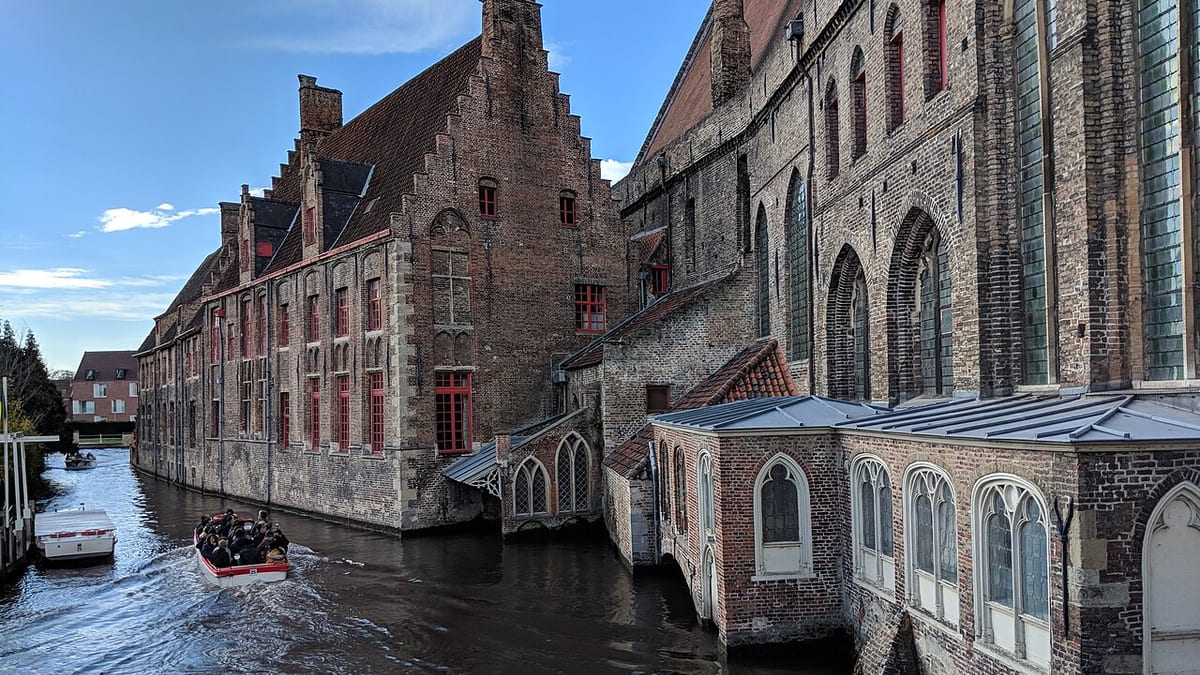
One current operator, Brugesboattour at Katelijnestraat 4, publishes a 2026 individual adult fare of €15 for an approximately 30-minute circuit. Its advertised 2026 season runs from 13 February to 30 December, with closure on Christmas Day. The same site already lists €17 for 2027, so a future trip should not be budgeted using the older rate.[5]
For two adults travelling in 2026, that adds €30 to either the independent day or a package that excludes the cruise. Consider it a change of perspective rather than an essential extra. Someone especially interested in interiors might prefer to spend the time and money on a museum.
Do not book the whole day around squeezing a boat trip into a short free-time window. Boarding arrangements, queues and the walk to the departure point take additional time beyond the advertised sailing duration. On a group outing, ask the guide how much return margin is needed before committing.
Choose depth or breadth before leaving Brussels
A Bruges-only day is my recommendation for visitors who enjoy art, slow meals, detailed photography or wandering without a guide's clock. A two-city escorted trip is a better fit for those seeking an overview and willing to trade depth for variety.
Weather and mobility can also change the balance. A full outdoor walking programme may be tiring even when the transport is comfortable. Ask a tour operator about walking distances, surfaces, opportunities to sit and the consequences of leaving the group early. Do not assume "by train" means that the sightseeing itself involves little walking.
Whichever format you choose, avoid a tightly timed dinner reservation back in Brussels immediately after the advertised return. An independent day should preserve flexibility; an escorted day should not turn a modest delay into a missed evening booking. Leave with a clear priority, not a list so long that the journey becomes an obstacle to completing it.