For a cheap lunch in Brussels, start with a filled roll or sandwich rather than assuming every casual restaurant is inexpensive. My Tannour publishes rolls from €6, while Fritland lists a €9 mitraillette and €6 sandwiches. These are useful food-only benchmarks: drinks, sides and a seated restaurant meal can move the total into a different budget category.[1][2]
Set a complete-meal budget, not a headline-price target
A good budget lunch should satisfy your appetite and fit your route. A low-priced side dish is not automatically a full meal, and a cheap restaurant across the city can become poor value once you add transport and time.
Use three questions before ordering. Is the listed price for the item you actually want? Does it include the side or sauce shown in the photograph? Will you need another purchase immediately afterwards? Those questions are more useful than a city-wide claim that lunch "costs about" one fixed amount.
For this shortlist, the basis of selection is clear published prices, useful locations or recognisable meal formats - not personal tasting or a declaration of the city's cheapest food. Prices are the restaurants' own published examples checked for this article; they should not be confused with potentially different delivery-platform totals.
If your ceiling is €10, make that the total rather than the price of the main item. Decide whether you are keeping lunch simple or reserving room for a drink. An inexpensive main with several small additions can cost more than a clearly priced set meal elsewhere.
My Tannour: choose a roll rather than a plate
My Tannour's menu distinguishes filled breads from plated meals. Published roll examples include zaatar at €6, falafel at €8 and chicken with orange and cardamom at €9. By comparison, the falafel plate is €15 and the chicken plate €16. The cheaper and more expensive listings are different meal formats, not contradictory prices for the same order.[1]
That distinction gives you control over the bill. Choose a roll for a straightforward lunch; choose a plate when you want the additional accompaniments and a more substantial stop. Ask specifically for the format you intended rather than relying only on the filling's name.
For a worked example, two €8 falafel rolls total €16 before drinks. Two €15 falafel plates total €30. Neither calculation establishes the better portion for every appetite, but it shows why "we ordered the same filling" does not necessarily mean "we ordered the same meal".
The menu includes tahini, dairy ingredients and different sauces across its products. A vegetarian filling should not be treated as proof that the whole item meets every dietary requirement. Ask about the bread and sauce as well as the central ingredient.[1]
My Tannour describes its food as Syrian cuisine.[3] It belongs in a Brussels lunch guide because the city's everyday food choices are broader than Belgian restaurant classics. There is no need to spend every meal on a visitor-oriented national dish to eat meaningfully during a city break.
Fritland: a central option with clear price steps
Fritland's menu lists small fries at €4.50 without sauce or €5.50 with sauce, a €6 filled baguette and a €9 mitraillette. The mitraillette includes fries within the sandwich. A carbonnade option is listed at €11 with fries, compared with €6.50 without them.[2]
The practical lesson is to read the inclusion rather than add the same side automatically. Ordering a mitraillette and a separate portion of fries may be exactly right for a very hungry diner, but it is not necessary simply because "sandwich" sounds like a small lunch.
Choose plain fries when you want a snack or a deliberately light stop. Choose the filled sandwich when you need something more structured. The €11 carbonnade-and-fries option is above a strict €10 ceiling, but it offers a published-price alternative for someone wanting a Belgian-style hot dish rather than another sandwich.[2]
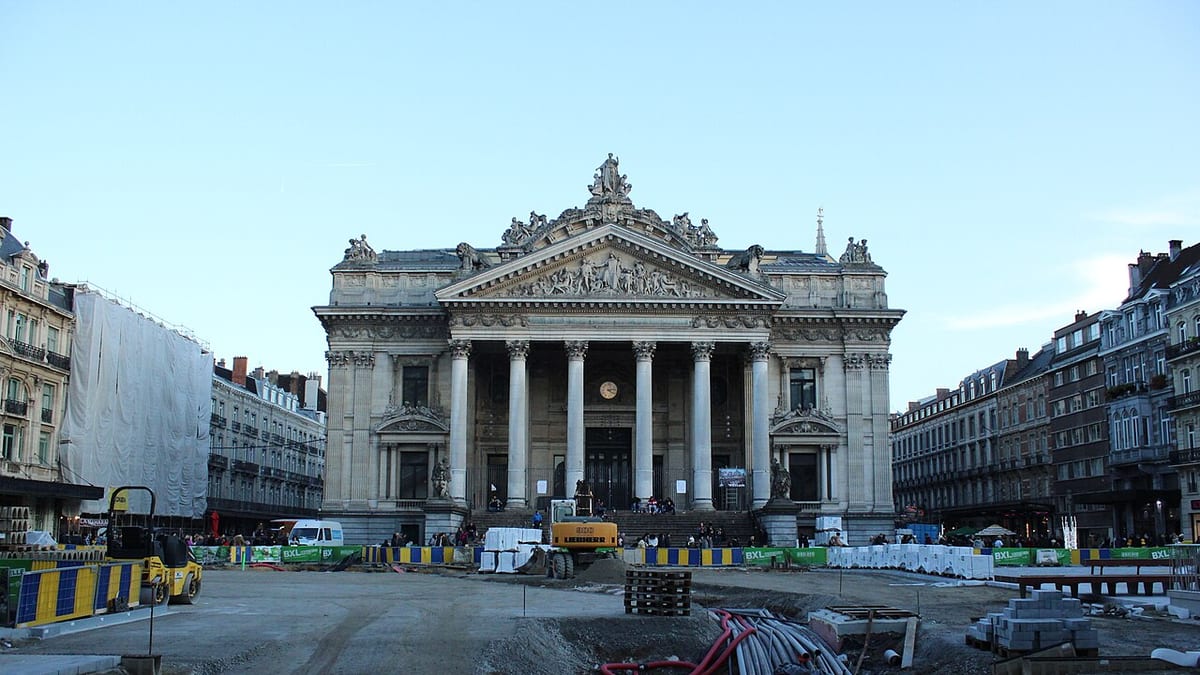
The restaurant is at Rue Henri Maus 49, near the Bourse.[4] That makes it a practical stop within a central sightseeing day rather than a destination requiring a special cross-city journey. Convenience is part of its value; there is little benefit in walking away from the area solely to save a small amount on an equivalent lunch.
Be equally deliberate about sauces. Ordering "with sauce" changes the listed fries price, and several extras can quietly change the final amount. Ask for the total before paying when your budget is firm.
L'Express: a shawarma stop near Grand-Place
L'Express identifies its address as 8 Rue des Chapeliers and describes a Lebanese menu centred on shawarma, alongside plates and other dishes. Its location is useful for a lunch break near Grand-Place without turning the meal into a separate excursion.[5]
A wrapped shawarma and a mixed plate serve different purposes. The wrap suits someone who wants to keep moving after a relatively short meal. A plate makes more sense when the lunch stop itself is part of the afternoon and you want time to sit with several components.
A reliable current item-price list could not be retrieved for this article, so no exact budget promise is attached to L'Express. Read the displayed menu before committing. This is a location-and-format recommendation, while My Tannour and Fritland provide the verified numerical benchmarks.
That limitation is preferable to repeating an old price that no longer buys the advertised meal. For a strict spending cap, choose the venue with a clearly displayed total that meets it. For someone with a little flexibility, the Lebanese option adds variety to several days of sandwiches and fries.
Keep the saving instead of spending it on extras
The easiest lunch decision is often made before you become very hungry. Identify one suitable place near the day's main sights and one nearby fallback. You do not need a ranked list of twenty restaurants; you need an option that is open, affordable and convenient when you reach it.
Treat a delivery-app menu as a different buying channel, not automatically the restaurant's walk-in price. Platform fees, service charges and menu differences can make the final order unlike the amount quoted in a guide. Compare the checkout total with what you would actually pay in person.
A picnic-style lunch can work well when the weather and available seating suit it. In wet or cold weather, paying a little more for a comfortable indoor stop may improve the rest of the day. The lowest possible food bill is not always the best use of a limited holiday afternoon.
Finally, alternate meal styles rather than chasing one definition of authenticity. A filled bread one day, a modest hot dish the next and a simple bakery purchase on a busy sightseeing morning can keep the budget controlled without making every lunch feel identical. Use the published prices as decision tools, then choose the meal that fits the day you are actually having.