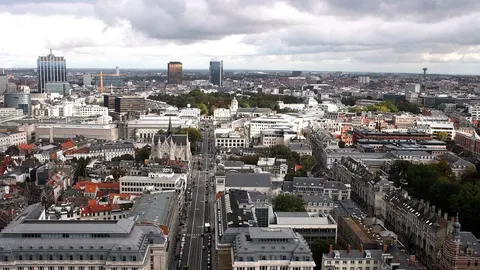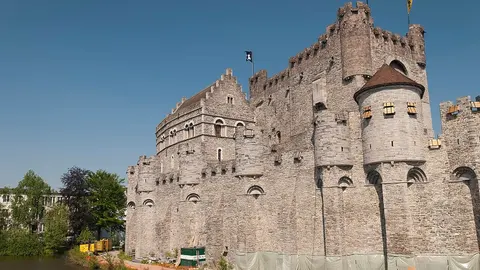
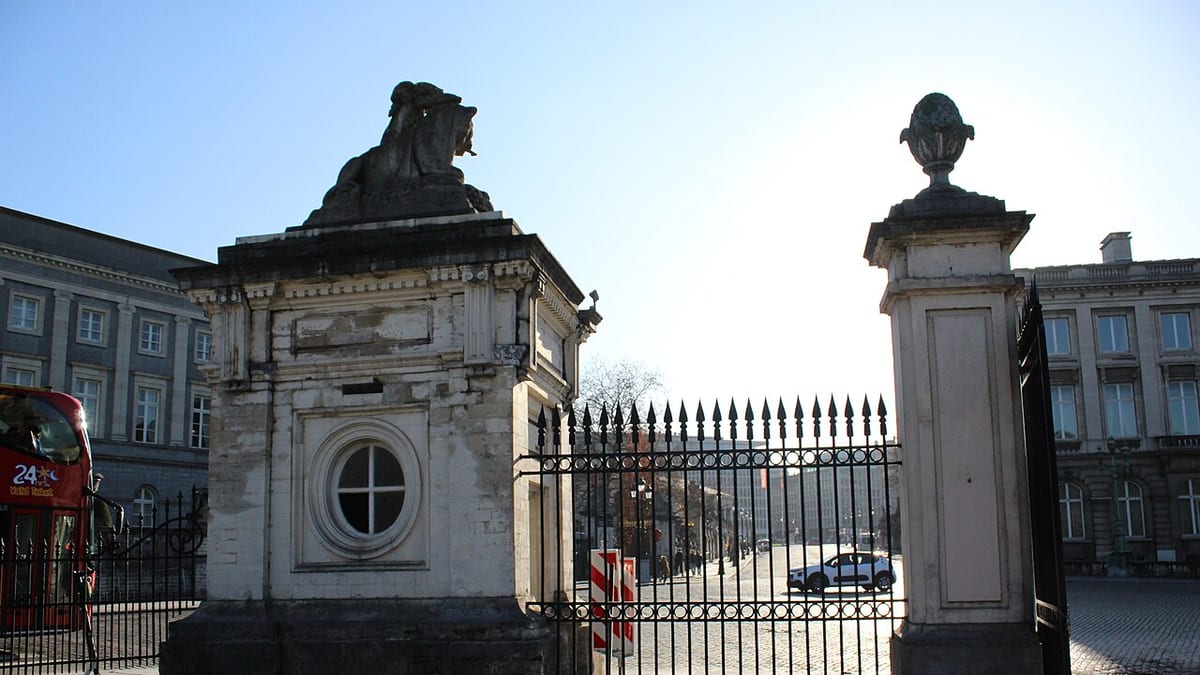
For a first time in Brussels, book accommodation around your main activities, identify the correct airport or station, and plan two full sightseeing days before adding excursions. The city becomes easier when you separate three decisions: where you will arrive, which neighbourhoods you want to explore, and how much paid sightseeing you genuinely enjoy.
Fix the arrival before choosing the hotel
Brussels Airport at Zaventem and Brussels South Charleroi Airport require different transfers. Zaventem has a railway station beneath the terminal, with the airport quoting approximately eighteen minutes to Brussels-Central. Charleroi requires a road transfer, either directly towards Brussels or to a railway station. A flight's low headline fare is not the whole comparison when the arrival time leaves you with a difficult onward journey. [1][2]
For Charleroi, SNCB now describes separate train and TEC airport-bus tickets and routes through Charleroi-Central, Luttre or Fleurus depending on the journey. Its planner uses the airport's TEC bus stop rather than pretending the terminal has a station. Flibco also runs a direct shuttle to Brussels-Midi; use the operator's departure that matches your flight rather than an old generic bus schedule. [2][3]
Arriving by international train is a different calculation again. Brussels-Midi and Brussel-Zuid identify the same station; international services and local transport meet there. Match the name on your booking to the actual station before selecting a walking route. "Brussels" alone is not a precise enough destination for collecting a ticket or meeting a driver. [4]
Keep the arrival day light. A prepaid museum slot immediately after landing transfers the risk of every flight, baggage and rail delay into your sightseeing budget. A neighbourhood walk and dinner reservation with reasonable flexibility are better starting commitments.
Choose convenience for the trip you are actually taking
For a classic first visit focused on the Grand-Place, covered galleries and Royal Quarter, favour accommodation with a straightforward route to those places. Centrality is valuable because it allows breaks between activities, not because every central room is automatically better.
For architecture-focused days, consider the southern districts and a direct connection to your booked interiors. For European-institution visits, proximity to that quarter can be more useful than sleeping beside the historic square. The tourism authority's Royal Quarter–Sablon–Marolles route illustrates why the southern centre can work as a coherent walking area. [5]
A station-adjacent hotel suits an early train or several rail excursions, but inspect the precise entrance and route from the platform. A property described as "near Midi" may save time on travel days without being the right place for your preferred evening routine.
Compare the final cost, including mandatory accommodation charges. The regional standard levy is €5 per unit-night, while some hotels publish a €5.60 guest charge after VAT. Determine whether it is already included rather than applying an extra amount automatically to every advertised room rate. [6][7]
Use simple transport unless a pass earns its cost
For occasional STIB journeys, contactless payment is straightforward: the currently published fare is €2.40, with an €8.50 daily cap. Use the same card or device for connections within sixty minutes. Airport-to-city bus travel has its own €7.90 fare, so do not treat an airport arrival as an ordinary €2.40 urban ride. [8]
Each person needs their own card or device for this payment method. Alternating between a physical card and a phone also risks treating the journeys as different payment identities. Keep the method consistent, and present that same card or device if inspected. [8]
For a mostly walkable two-day visit, two separate urban rides per day would cost €9.60 in total at the stated single fare. That calculated example is a useful comparison before buying an unlimited product. A traveller taking four or more journeys each day has a different pattern.
STIB contactless payment does not automatically cover every train or other operator in the region. Multi-operator products such as Brupass have different coverage and validation rules. Match the ticket to the journey instead of assuming that all transport within the same city shares one payment system. [9]
Reserve the scarce visit, not the whole holiday
Start with one attraction that matters enough to organise a day around. The Horta Museum is a sensible example for architecture enthusiasts because an online reservation secures access to its house and studio. Then add a nearby walk and a meal rather than booking three distant interiors back-to-back. [10]
The Royal Museums require attention to opening days and entrances. For the central Magritte Museum, online ticket holders use Place Royale, while visitors needing the ticket desk go to Rue de la Régence. A Monday arrival is not a reason to assume every museum will be available that afternoon. [11]
A museum pass is most useful after you have chosen the museums. The Brussels Card includes participating institutions, with public transport offered as an optional addition rather than a universal feature of every card. Compare the actual included visits you will use, not the total number advertised. [12]
Do not overlook free cultural options. The House of European History offers free visits and can anchor a European Quarter day without making your entire schedule depend on paid admissions. Choose it because the subject interests you, rather than adding it merely to increase the number of museums visited. [13]
Leave room for meals, weather and ordinary life
Book a special dinner when the restaurant is an important part of the trip. For everyday meals, choose around the route you are already taking. Repeatedly crossing town for minor food stops can consume more of a short break than the actual meal.
Carry an extra layer and a practical rain solution rather than relying on every outdoor plan working. A museum-heavy afternoon and a shorter street walk are a better fallback than retreating to the hotel simply because the original route was too ambitious.
For longer evenings, look up the return journey before the last drink. STIB's planner gives route-specific departures; a citywide statement about late transport is not a guarantee that your particular connection still runs. [14]
Keep bags controlled in busy places and at transport hubs. Current UK travel advice warns about theft and pickpocketing and notes that strikes can disrupt travel. Those are reasons for sensible precautions and a day-of-travel service check, not a reason to treat an entire city as off-limits. [15]
A successful first visit needs a few firm choices and plenty of flexible space: the correct arrival, a convenient base, one or two worthwhile reservations and enough time between them. Day trips and additional museums should improve that plan, not crowd out the Brussels you came to see.
Source & editor notes
Prices are the operators' published figures checked on 6 November 2026. The two-day transport total is a calculated example. Accommodation-area recommendations are editorial choices based on the visitor's route, not neighbourhood safety rankings.