Brussels is worth visiting for a short cultural break, particularly if you enjoy architecture, museums and the relationship between European history and present-day institutions. It is a weaker choice when your only priority is a compact canal-town setting. Give it two purposeful days rather than judging the city solely from the streets between a station and the Grand-Place.
The strongest reason to come is the variety of interests
The Grand-Place makes a persuasive introduction, but it is not the complete argument for a stay. UNESCO recognises the square as an ensemble of civic and commercial architecture, rather than one isolated monument. It rewards looking closely at several buildings and understanding how they relate to each other. [1]
The more distinctive follow-up is an architectural interior. Urban Brussels identifies the Horta Museum, Hôtel van Eetvelde, Hôtel Solvay, Cauchie House and Maison Hannon among the places that explain the city's Art Nouveau heritage. These are not interchangeable façades: they present different architects, clients and ways of organising domestic space. [2]
For someone who normally walks past buildings without entering, one booked interior can change the value of the whole trip. Seeing how a staircase, light source and room connect is a different experience from collecting exterior photographs. You do not need to become an architecture specialist; curiosity about how a house works is enough.
The museum choice also extends beyond paintings. At Cinquantenaire, the Art & History Museum, Royal Military Museum and Autoworld serve quite different interests. A couple or family can choose one collection that genuinely appeals instead of agreeing reluctantly to a generic "culture day." [3]
That breadth is the best reason to allow more than a quick stop. The extra time is useful because it lets you choose, not because every visitor needs to complete a long list.
European history is an attraction, not just an office district
Visitors sometimes dismiss the European Quarter as a business area and then wonder why Brussels felt thin on sightseeing. The House of European History offers a free museum visit devoted to the continent's past. It gives the district a concrete purpose beyond photographing institutional buildings. [4]
This is a particularly good fit for travellers who like to connect a place with wider events and ideas. It is less compelling for someone who wants their entire holiday outdoors. Neither preference is wrong; the useful question is whether the actual subject interests you.
A first visit can therefore pair two very different experiences: a historic interior in one part of the city and a contemporary account of European history in another. Add meals and neighbourhood walking between them, and Brussels has a clear identity rather than functioning as a railway interchange.
Families should make the same assessment by age and attention span. The fact that an exhibition is free does not mean it is automatically the right use of a small child's afternoon. Choose activities around the people travelling, then use price as one factor rather than the sole selection rule.
You can enjoy the city without buying a long attraction list
The City of Brussels maintains a comic-book route through its murals. Choosing a small cluster gives an ordinary walk a theme without turning it into a compulsory guided excursion. It also makes a useful contrast to a morning inside a formal museum. [5]
Cinquantenaire supplies another outdoor counterweight, with gardens, monuments and museums around the same site. Plan a park break before or after your chosen collection instead of treating the open space merely as the distance between entrances. [6]
Food and café stops can be part of that rhythm, but they should not carry the entire case for a destination. Decide whether you want a traditional sit-down meal, a bakery break or several casual dishes. Spending heavily on the most conspicuous restaurant near a landmark is not a necessary condition of experiencing the city.
Likewise, shopping for chocolate is an enjoyable addition when you actually want chocolate. It is a poor substitute for choosing a neighbourhood or exhibition that gives the day a purpose. A successful Brussels break need not consist of buying every product associated with Belgium.
The disadvantages are practical, not mysterious
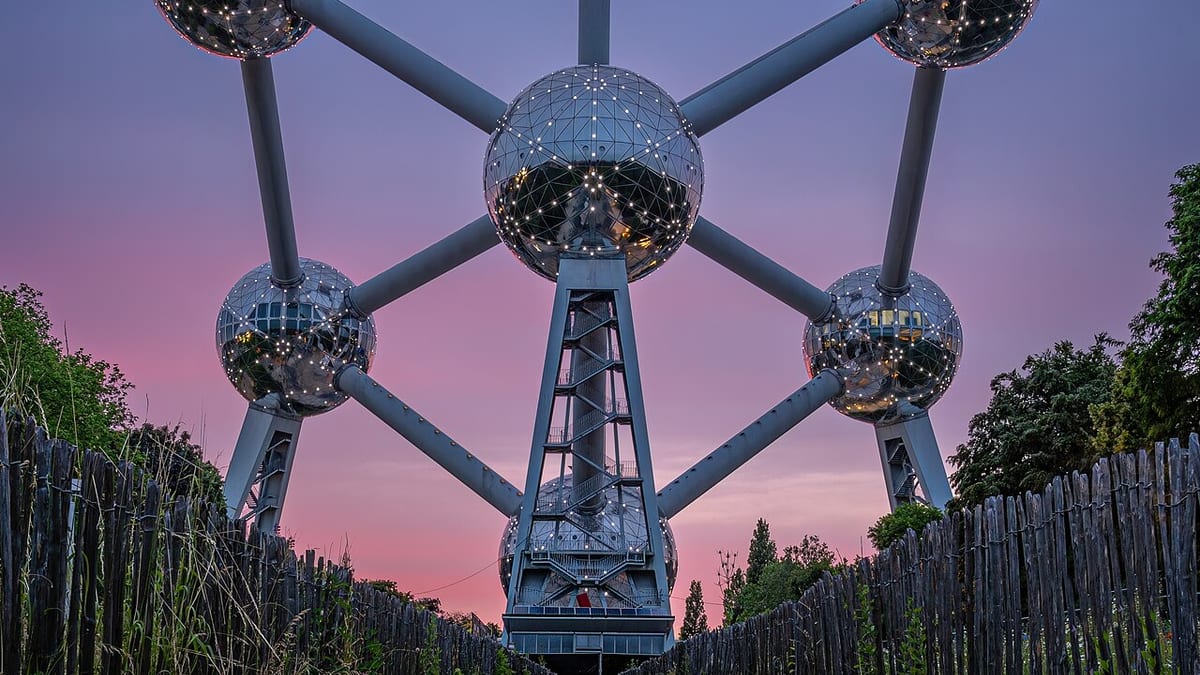
Brussels works less well when you assume all its main attractions belong to one compact walking loop. The northern Atomium, central museums and southern architectural houses create competing demands on a short schedule. Pick geographical groups and accept that one excursion may displace another.
There is also no sound basis for promising that it will always be a cheap city break. Compare the accommodation available for your dates, then add transport, food and the admissions you will actually use. A free exhibition does not compensate automatically for an expensive room, and a museum pass does not save money when you visit only one participating museum.
Current operations can alter the value of a particular plan. As checked on 6 November 2026, the Atomium's upper panorama is temporarily unavailable. KANAL's public opening is announced for 28 November, so it is not an option earlier in the month. Someone travelling chiefly for either experience should make the decision on those conditions rather than a timeless attractions list. [7][8]
Ordinary city precautions matter too. UK travel guidance flags pickpocketing in crowded places and possible disruption from strikes. Keep bags secure, avoid leaving belongings unattended while distracted by tickets or maps, and verify transport before an important connection. That is practical preparation, not a numerical safety rating for every neighbourhood. [9]
Brussels or Bruges is really a question about your holiday
Choose Brussels when you want several cultural subjects, architectural interiors and a working-city setting. Choose Bruges when canals and a sustained walk through the historic centre are the main objective. The comparison is more useful than declaring one universally prettier or more authentic.
It is possible to combine them from a Brussels base: SNCB publishes a direct journey to Bruges averaging just over an hour. But the return railway journey and station approaches still consume part of the day. With only two full days available, adding Bruges is a decision to reduce the Brussels visit, not a free extra. [10]
For a longer Belgium trip, remaining in one hotel can be convenient. For someone who wants relaxed evenings in Bruges itself, a separate overnight stay may be more satisfying. Neither arrangement needs to be defended as the only correct way to travel.
How much time makes the visit worthwhile?
One full day can provide a worthwhile introduction: the central square, a coherent walk, one indoor visit and a meal. Two full days are a stronger recommendation for a first visit because they allow contrasting subjects without constant movement. Three days suit travellers with several specific museum or architecture interests.
These are editorial planning recommendations, not minimum times required by the attractions. A visitor interested only in the central streets may be satisfied sooner; someone studying Art Nouveau could spend much longer.
The decision comes down to whether you can name two Brussels experiences you actively want. A particular interior and museum, European history and a mural walk, or a collection and a neighbourhood meal are all credible reasons to come. When those appeal, Brussels deserves its own time rather than serving merely as the place where you change trains.
Source & editor notes
This is an editorial assessment based on verified visitor offerings, not a claim of firsthand testing or an objective city ranking. Current closures and opening dates are separated from the broader recommendation.