Train World is worth visiting for railway enthusiasts, families interested in large machines and travelers who enjoy transport history presented through real objects. It is less compelling when you have only a few hours in Brussels and no interest in trains. Allow a proper museum visit rather than expecting a quick station exhibit or a heritage train ride included with admission. [1][2]
What you are paying to see
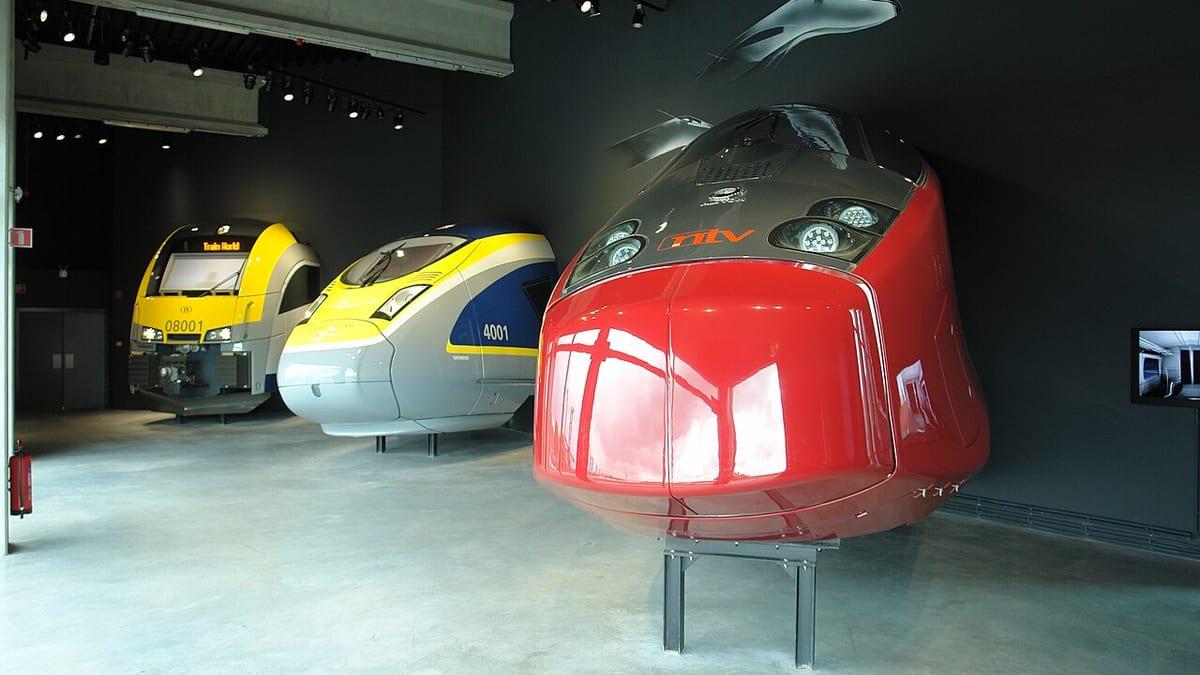
The collection includes major historic locomotives, notably the early Pays de Waes and the streamlined Type 12. Their appeal is not limited to knowing technical specifications: standing beside machines of different eras makes changes in engineering and design visible in a way a photograph cannot. [1]
Use that contrast to organize the visit. Look at the shape of an early locomotive and then the more streamlined design of a later one. Ask what each form suggests about speed, machinery and the image railways wanted to project. This gives a non-specialist visitor something concrete to follow without turning the outing into a lesson in model numbers.
Train World describes its permanent exhibition as covering Belgian railways past, present and future, using an interactive presentation. Treat the full-size collection as the main reason to come, with the interpretation helping connect individual vehicles to a wider story. The museum's visitor offer is not a standard excursion aboard those historic trains. [2]
A temporary exhibition can provide an extra reason to visit, but assess the permanent collection first. Temporary titles and activities change, and an old photograph of a family event is not proof that the same event is running on your date. A good museum choice should still make sense without relying on an unconfirmed add-on.
Who gets the most out of it?
Railway enthusiasts can take their time with details, but a family does not need to examine every label. Pick a few vehicles to compare, let each person choose a favorite and discuss why. For a younger child, scale and shape may matter more than chronology; for an older child, a question about how passengers or workers used a vehicle can sustain attention.
Avoid promising unlimited climbing or access to every cab. Historic vehicles are museum objects, and any access offered should follow the on-site instructions. A child expecting an indoor playground may be disappointed even when the collection itself is impressive.
Adults traveling without children should not dismiss Train World as a children's attraction. Its subject can appeal to interests in industrial design, travel and the relationship between infrastructure and daily life. Conversely, there is no obligation to choose it simply because it is highly rated: a visitor who prefers painting or architecture may make better use of the same time elsewhere.
I suggest allowing two to three hours for an independent visit, with longer for a strong specialist interest or an additional exhibition. This is planning advice, not a measured average. The museum's own guided visit is approximately two hours, which is a useful indication that the collection deserves more than a brief stop. [3]
Tickets and the real family cost
Published admission is €15 for adults aged eighteen and over, €11 for ages six to seventeen, €5 for ages four and five, and free for children through age three. Two adults with children aged five and nine therefore pay €46, while two adults with two children aged eight and twelve pay €52. These totals are calculations from the age bands, not discounted family packages. [4]
The distinction between a five-year-old and a six-year-old is worth noticing before budgeting. It is also a reason not to reuse a generic "children's ticket" figure when comparing attractions. Use the actual ages in your party and add transport and food separately.
Brussels Card and Museum Pass holders obtain their museum admission ticket at the cash desk. The museum also lists activities with separate conditions: a pass covering ordinary entry should not be assumed to cover every workshop or special activity. Check the specific activity page before adding it to your plan. [4]
Train World's ticket page advertises a Discovery rail offer using a code supplied with an online museum purchase. That is a separate discounted train ticket, not transport automatically embedded in the museum admission. Compare the actual rail quotation with your existing ticket or pass before buying another travel product. [4]
Reaching the right station
The museum is beside Schaerbeek railway station, at Place Princesse Elisabeth 5, also written Prinses Elisabethplein 5. Use Schaerbeek as the railway destination rather than assuming the museum is at Brussels-Central or Brussels-Midi. The museum gives the station-to-entrance walk as approximately two minutes. [3]
Choose transport from your actual starting point. A train may be straightforward from another railway station, while a tram journey can fit better from a nearby neighborhood. The shortest-looking route on a map is not necessarily the simplest if it adds a transfer for every member of a family.
Plan the return journey at the same time as the outward one. This matters most when the museum is the day's final activity and you have a fixed departure afterward. Keep any luggage arrangement separate from the exhibition visit rather than assuming a railway-themed museum functions as a station baggage office.
Opening hours, food and accessibility
The regular schedule is Tuesday to Sunday, 10:00–17:00, with last admission at 15:30. Monday is normally closed. The gap between final admission and closing means that arriving at the cutoff gives you a much shorter visit than the two-to-three-hour plan above. A late morning or early afternoon arrival is a more comfortable choice. [3]
For a food break, the current visitor page identifies La Station des Rêveurs at the entrance, with light meals and drinks. Do not rely on the name of an older station restaurant when arranging a meeting. Keep any meal before or after the main visit unless staff confirm the re-entry arrangements you need. [3]
Train World describes the museum as accessible for visitors with reduced mobility and offers adapted activities, including sensory and guided formats. It also organizes low-stimulus days. Those are scheduled arrangements, not a promise that every ordinary opening day has reduced sound and lighting. [2][3]
Contact the museum about the particular experience required: a wheelchair route, a signed tour, a quieter session or help for a visually impaired visitor. Building access and participation in a specific historic vehicle or activity are different questions. A precise request is more useful than assuming that one accessibility label settles every detail.
The best way to make it worthwhile
Choose Train World as a focused half-day rather than one item in an overloaded circuit. Arrive with enough time, compare a handful of memorable vehicles and let the collection determine how long you stay. For families, spending longer with a few objects can be more rewarding than pushing through every display after attention has faded.
It is a strong choice when the trains themselves excite you. It is a weaker purchase when you mainly want a ride, a central-city landmark or something to fill an inconvenient Monday. Matching the experience to the reason for visiting is the simplest way to decide whether the ticket is good value.